1997: Highbury cannot grow
In 1997 Arsenal began looking at a move after Islington Council refused planning permission to expand Highbury, the club's home since 1913. While the search went on, Arsenal played its Champions League home ties at Wembley in 1998–99 and 1999–2000.
2000–2002: Ashburton Grove
The site the club chose was Ashburton Grove, a former industrial and waste-disposal estate in Holloway, which Arsenal bought in 2000. The planning application went in in November 2000. Islington Council approved it on 10 December 2001, and the council granted planning permission in May 2002. In January 2002 Sir Robert McAlpine was appointed general contractor.
2003–2004: the money
The stadium had no government subsidy. In 2003 Arsenal secured a £260 million loan from a group of banks led by the Royal Bank of Scotland, but work was suspended in April 2003, and funding was only confirmed in February 2004. The same year, Emirates bought the naming rights in a 15-year deal estimated at £100 million, which included a seven-year shirt sponsorship from 2006–07. Ground was broken in February 2004.
2004–2006: building the bowl
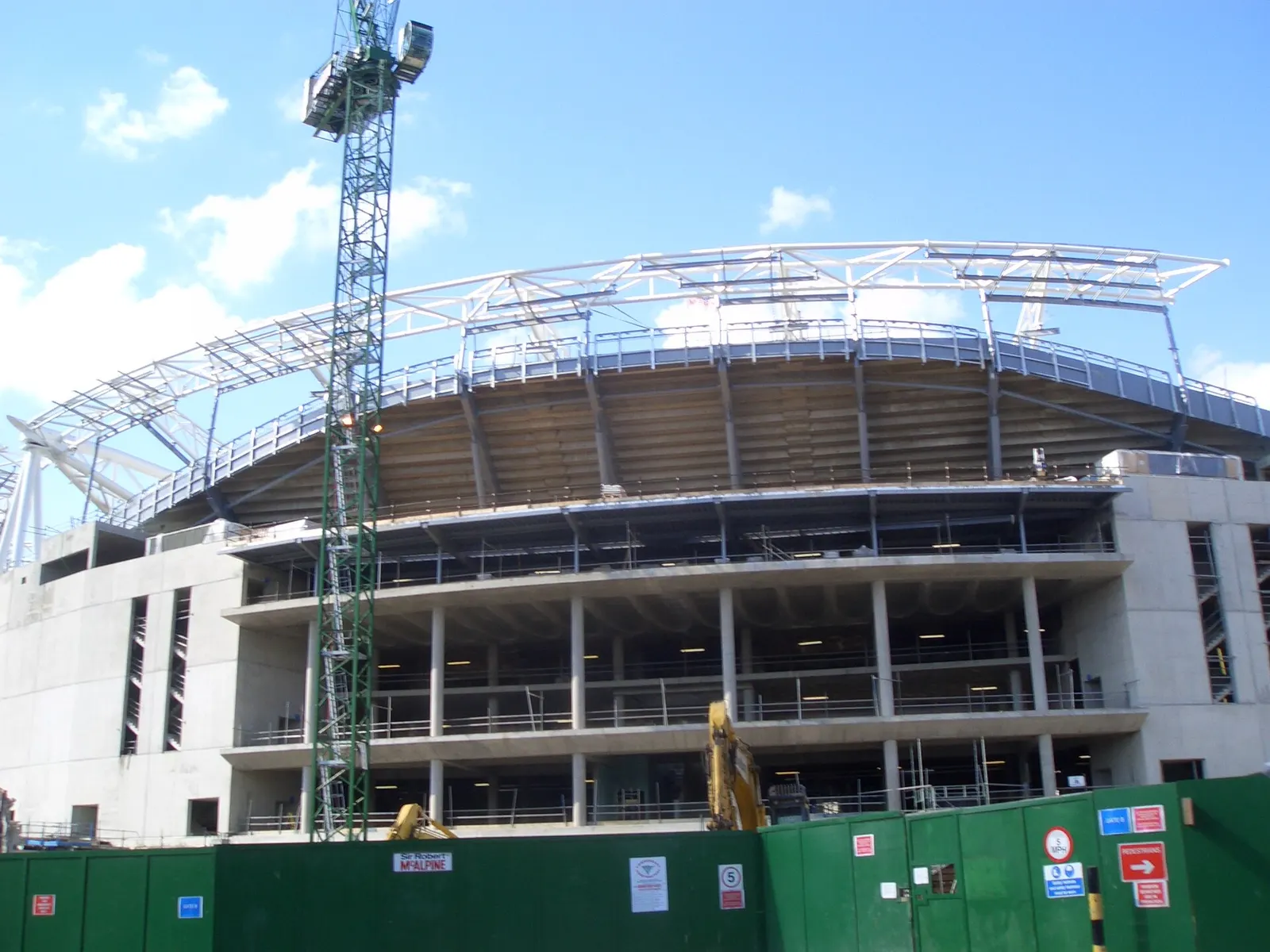
The design was by HOK Sport, which became Populous in 2009, with BuroHappold as structural and services engineer and Arcadis as construction consultants. The stadium topped out in August 2005. The pitch was laid north–south, like Highbury's, with a GrassMaster surface installed by DD GrassMaster on a playing field designed by Hewitt Sportsturf. On 13 March 2006 Abou Diaby installed the first seat. The final cost was £390 million.
The transport that was not upgraded
Wikipedia says that Finsbury Park station was upgraded for stadium crowds instead of Drayton Park and Holloway Road, which TfL declined to upgrade even though £7.6 million had been set aside. That decision still shapes every matchday: Drayton Park is closed and Holloway Road runs one way before the game and shuts after it. A planned expansion of Holloway Road station for matchday crowds was shelved.
May 2006: goodbye Highbury
The last match at Highbury was on 7 May 2006: Arsenal 4–2 Wigan Athletic, with a Thierry Henry hat-trick, a win that secured Champions League qualification. The old ground was turned into the Highbury Square housing development; see Highbury and Highbury Square.
July–October 2006: the new ground opens
The first match at the Emirates was Dennis Bergkamp's testimonial against Ajax on 22 July 2006, a 2–1 Arsenal win. The first competitive game, against Aston Villa on 19 August 2006, finished 1–1: Olof Mellberg headed the first competitive goal after 53 minutes and Gilberto Silva equalised. Brazil and Argentina played the stadium's first international on 3 September 2006. Prince Philip officially opened the stadium on 26 October 2006, standing in for the Queen.
What moved with the club
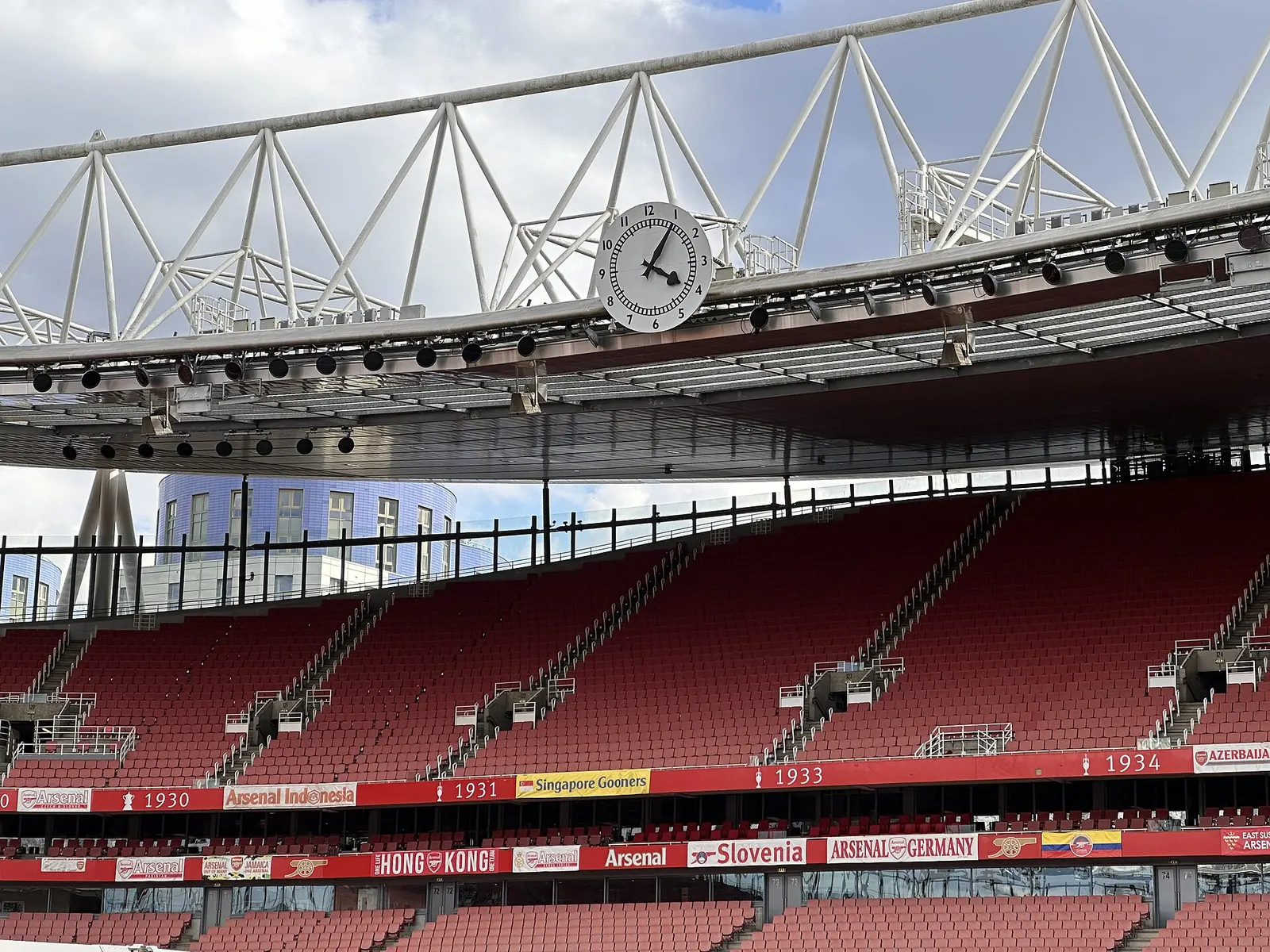
Several pieces of Highbury came too. The Arsenal museum, opened in 1993 inside Highbury's North Bank Stand, moved to the Emirates site in 2006. The clock that gave Highbury's Clock End its name was later moved to the new Clock End, with a larger replica, and the four stands were renamed North Bank, Clock End, East Stand and West Stand before the 2010–11 season.
Where sources disagree
The start of the Emirates partnership is dated 2004 by Wikipedia (when the naming rights were bought) and 2006 by Emirates (when the shirt deal and the stadium began). The planning dates are also easy to mix up: the council's approval of the application on 10 December 2001 came before the formal grant of planning permission in May 2002.